Match effort to terrain
The key to safe outdoor recreation in the North is matching your stamina and gear to specific ground friction. A leisurely five-hour outing can quickly become a gruelling ordeal if footwear fails on wet moss or headwind halts a canoe crossing.
Foot Travel: Pack Trekking & Day Walks
Moving on foot across Nordic ground demands distinct physical conditioning. Unlike engineered alpine switchbacks, Swedish and Finnish woodland trails follow post-glacial undulating relief with continual short climbs and descents over roots, granite domes, and bog boards.
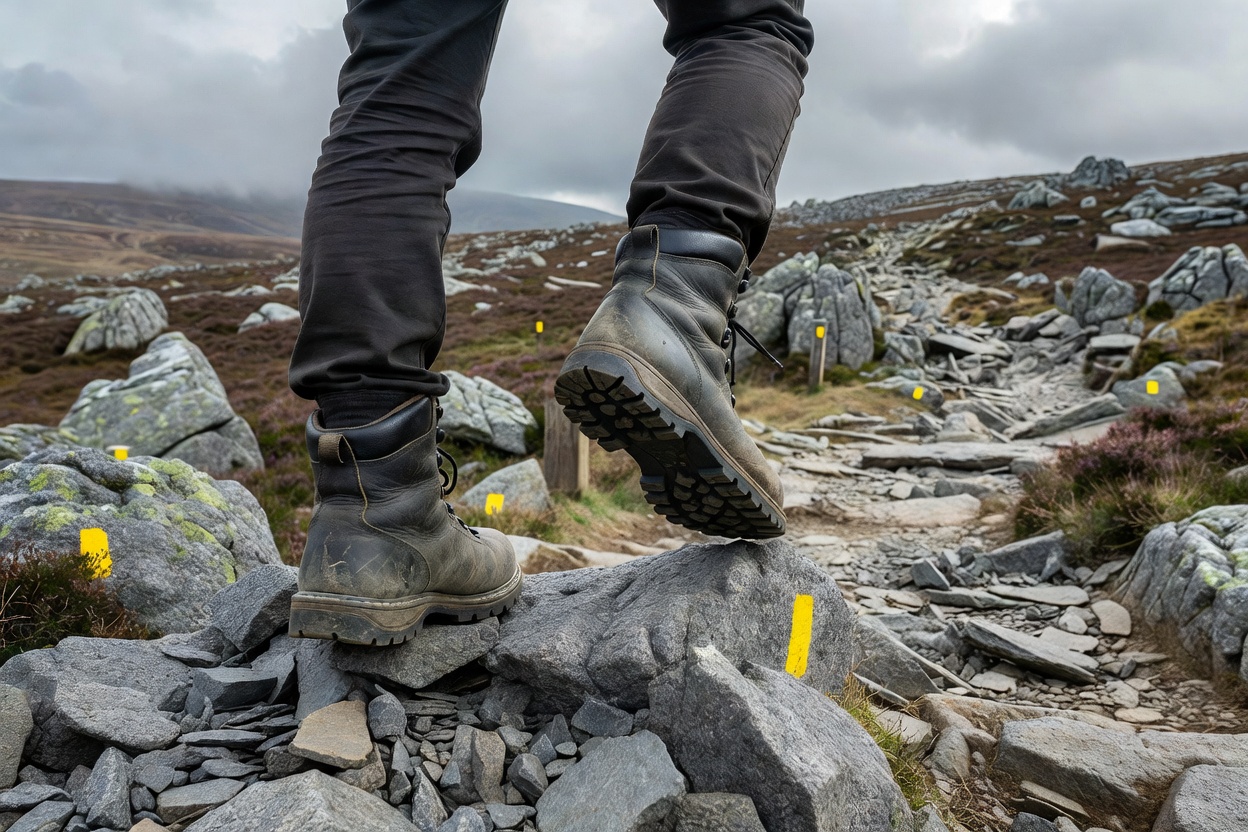
Footwear & Ankle Dynamics
Trail runners are widely celebrated on smooth continental trails, but on wet Nordic moraine with a 15-kilogram backpack, trail runners often saturate in seconds upon hitting bog fringes. Stiff-soled boots with waterproof membranes or quick-draining non-membrane boots paired with waterproof sealskin socks remain standard among seasoned guides.
Trekking poles reduce knee torque on boulder ascents and provide vital stability when testing the depth of peat depressions before committing full body weight.
Water Touring: Canadian Canoes & Sea Kayaks
Paddling offers high load capacity and access to uninhabited islands, but introduces wind exposure and portage mechanics.
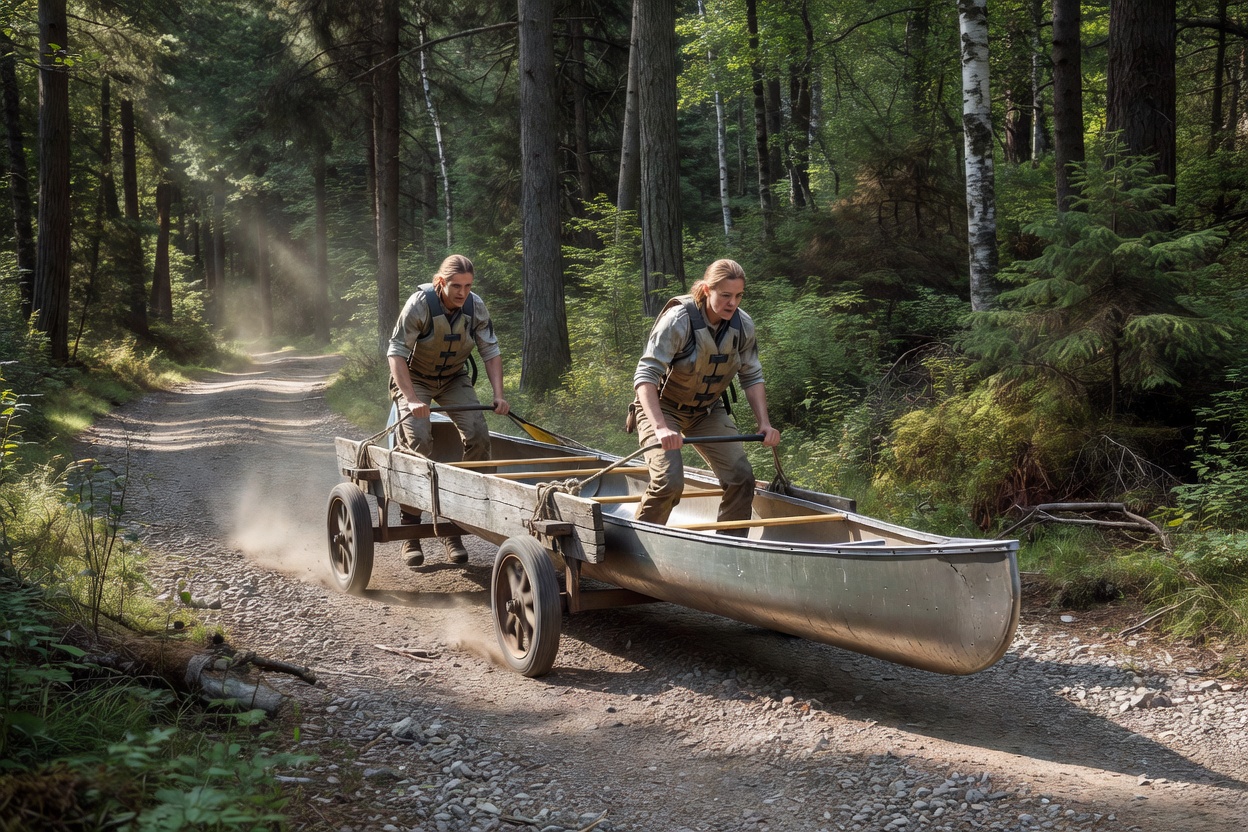
Portage Mechanics (Landtransport)
Nordic lake systems often require transferring boats between water bodies. The overland transfer—known as a landtransport—may range from 50 metres over wooden rolling logs to 3 kilometres along rocky forestry roads.
Paddlers must equip their craft with dedicated folding canoe trolleys (kanotvagn) featuring wide puncture-proof pneumatic wheels capable of clearing exposed tree roots.
Overnight Skills: Shelters, Stoves & Fire
Fixed wooden shelters are an iconic fixture of Nordic outdoor culture, taking the form of the Swedish vindskydd and Finnish laavu or autiotupa (open wilderness hut).
The Vindskydd / Laavu
A three-sided log structure open toward a stone fire pit. Free to use on a first-come, shared-space basis. Etiquette dictates squeezing together to welcome newcomers arriving in bad weather.
The Autiotupa (Finland)
Unlocked wilderness huts found in northern Lapland. Equipped with a cast-iron wood stove, bunk boards, and gas cooker. Intended for single-night emergency stays by non-motorised wilderness travellers.
Gas & Spirit Stoves
Do not depend on campfires for basic meals. Carry an enclosed storm stove (such as a Trangia system) running on methylated spirit or screw-thread isobutane gas canisters.
Terrain Activity Comparison Matrix
| Outdoor Activity | Fitness Level | Technical Challenge | Critical Gear Asset | Principal Risk |
|---|---|---|---|---|
| Forest Ridge Day Hike | Moderate | Low (staying on marked trails) | Contoured rubber outsoles | Slipping on wet granite / roots |
| Multi-day Pack Trekking | High | Moderate (bog navigation & pack weight) | Stiff waterproof boots & gaiters | Foot maceration & hypothermia |
| Inland Canoe Touring | Moderate | Moderate (portages & wind reading) | 50N PFD & robust canoe cart | Capsize in cold water away from shore |
| Fjell / Plateau Trekking | Very High | High (rapid weather shifts, fog) | 1:50 000 map, compass, hardshell | Disorientation & gale exposure |
The 10-Minute Wind Rule
When touring lake waters, weather changes occur with surprising speed. If you observe dark ripples forming in the distance or whitecaps beginning to foam across open water, do not attempt to paddle into the squall. Turn immediately toward the nearest leeward bay, land your craft, and wait out the wind on firm ground.