Time beside inland water
The post-glacial topography of Sweden and Finland created thousands of interconnected lake systems. Exploring these water bodies requires calculating wind fetches, understanding private sauna curtilages, and managing hypothermia risks even during midsummer.
Inland Waterway Typology
Not all Nordic lakes share the same character. Understanding the physical scale and sheltering of specific bodies of water determines whether an outing is suitable for a beginner paddler or only experienced open-water tourers.
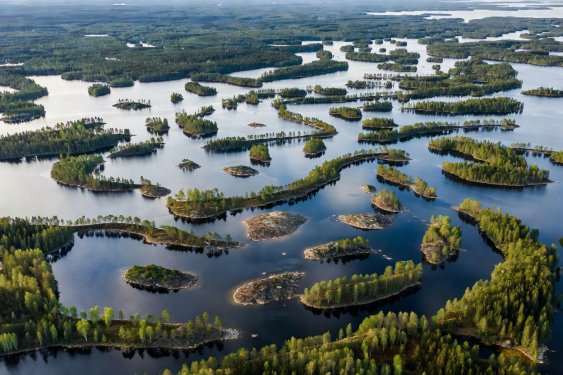
Lake Saimaa (Finland)
Europe's fourth-largest freshwater lake is not an open sea, but a maze of 14,000 islands. Exceptional wind shelter in inner channels, but highly complex line-of-sight navigation.
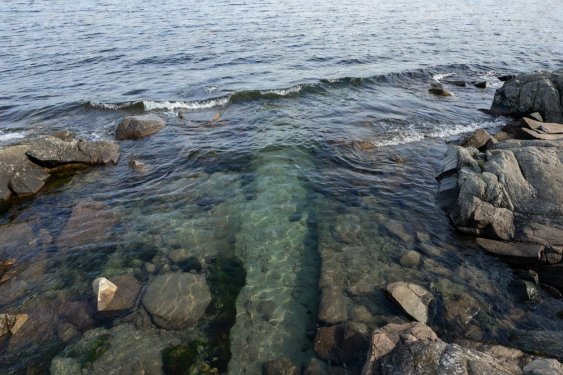
Lake Vättern (Sweden)
Reaching depths of 128 metres with extraordinary clarity. Unbroken open-water fetches can whip up steep, dangerous waves within thirty minutes of wind shifts.
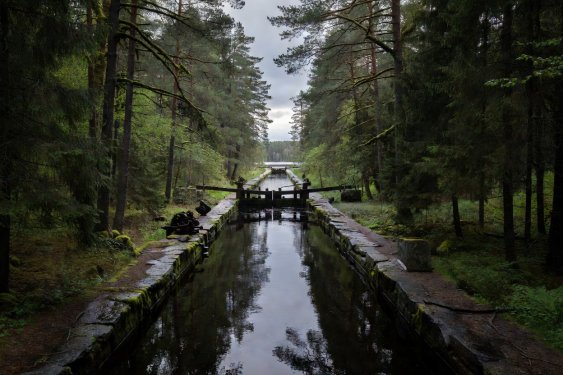
Dalsland Lake System (Sweden)
Narrow, elongated lakes linked by historic locks and portage trails (landtransporter). Excellent marked camp sites with compost toilets and fire rings.
Water Access & Shoreline Legalities
While public rights grant access to row, paddle, sail, and temporarily moor alongside uninhabited shores, explicit boundaries exist around private domestic properties.
| Legal Domain | Permitted Activity | Prohibited Activity | Legal Foundation |
|---|---|---|---|
| Private Shoreline (Tomt) | Passing by at reasonable distance (>50-100m) | Mooring at private jetties; entering residential eye-line | Hemfridszon (Home-peace zone) |
| Public Waterways | Unrestricted non-motorised transit; temporary swim | Obstructing commercial fairways or timber channels | Right of Public Navigation |
| Bird Sanctuaries (Fågelskydd) | Observation from outside marked buoys | Landing on designated islands between April 1 and July 15 | Naturvårdslagen / Nature Conservation Act |
| Inland Fishing | Angling with simple hook/line in Swedish 5 big lakes | Net fishing or trolling without specific municipal permit (Fiskekort) | Fiskerilagstiftning |
Water Potability Realities
A frequent myth claims that Nordic lake water is universally pure enough to drink straight from your cup. While deep oligotrophic lakes in northern Lapland boast astonishing clarity, inland lakes in central and southern regions receive runoff from pine litter and peat bogs, containing elevated humic acids and naturally occurring waterborne micro-organisms.
Always boil lake water for a rolling sixty seconds or filter it through a 0.1-micron hollow-fibre membrane filter before consumption. Humic tea-coloured water is non-toxic if boiled, but taste can be softened by filtering through activated carbon.
Wind Fetch & Shoreline Swell
On broad lakes like Lake Mälaren or Päijänne, wind blowing uninterrupted over 10 kilometres creates short, steep, choppy waves that can easily swamp open Canadian canoes. Always monitor morning isobar charts, paddle along windward shorelines, and never attempt cross-lake open traverses when wind speeds exceed 6 metres per second.