Walk beneath Nordic branches
The boreal forest (taiga) blankets roughly 70 percent of Sweden and Finland. For the hiker, this landscape is a subtle interplay between bedrock ridges, deep moss blankets, and water-logged peat mires.
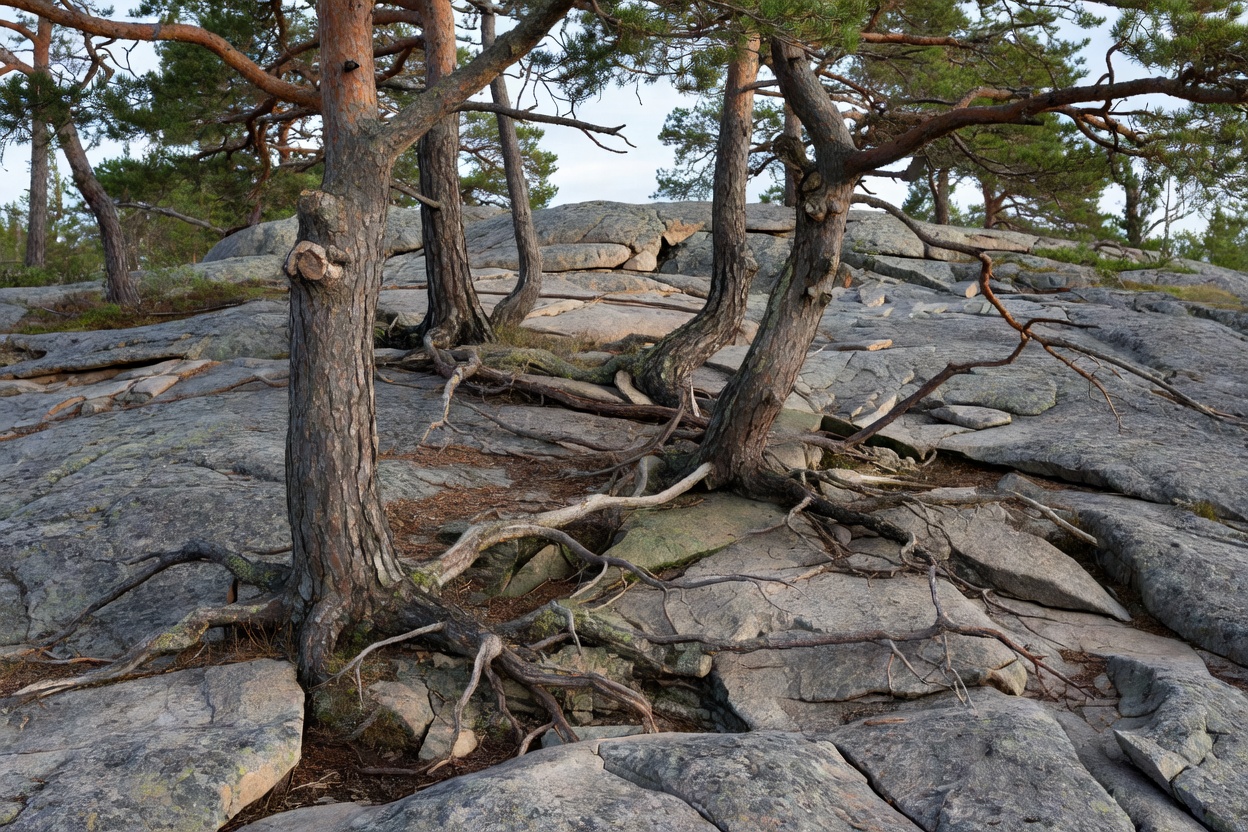
The Hällmark: Pine-Bedrock Ridges
Common across central Sweden and southern coastal Finland, hällmark consists of bare Precambrian granite plates dusted with dry lichen and punctuated by stunted, wind-sculpted Scots pines. This is dry, fast-walking ground when weather is stable.
However, morning dew or drizzle transforms lichen and bare stone into an extraordinarily slippery surface. Hikers must adopt shorter strides and watch for hairline fractures where roots can snag footwear.
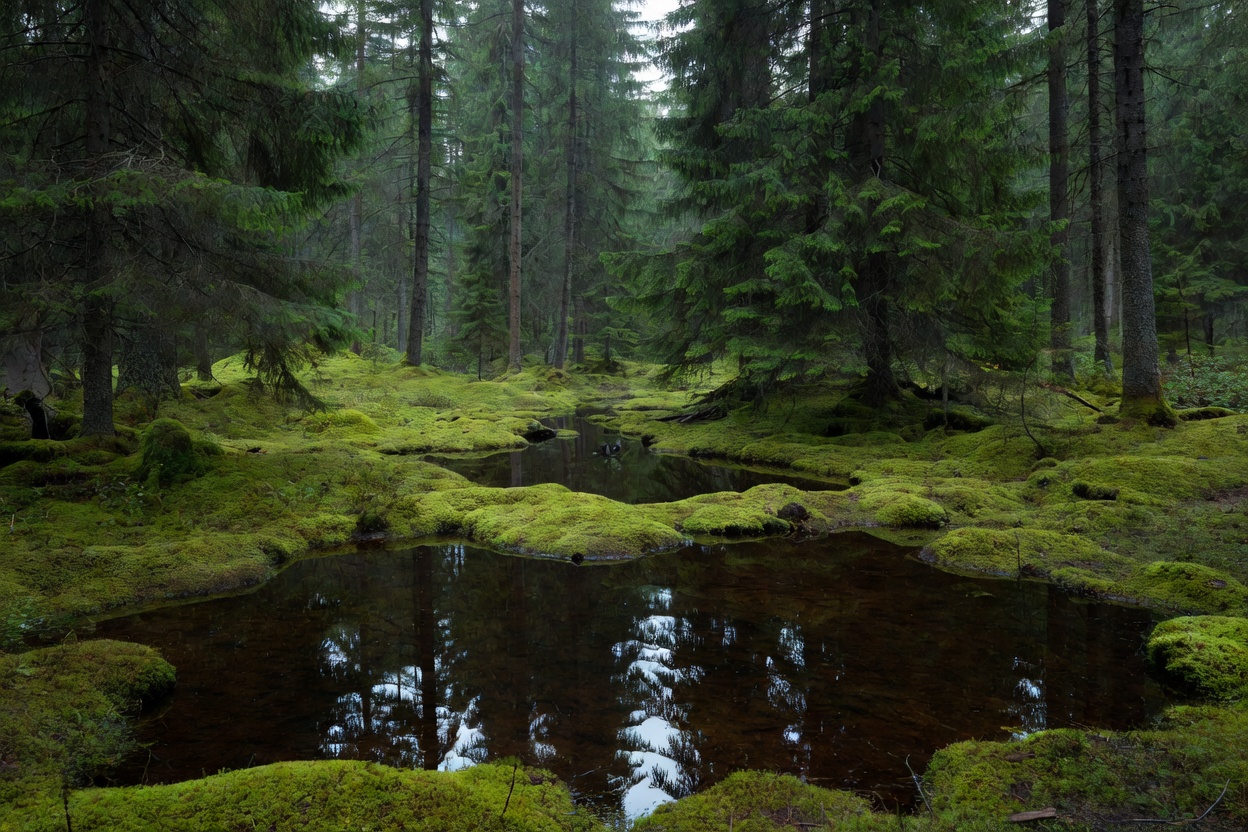
The Spruce Mire: Dense Moss Depressions
In low basins where drainage is restricted, Norway spruce thrives amid deep cushions of Sphagnum moss and peat. These micro-habitats maintain high humidity and lower temperatures, creating an enclosed, atmospheric woodland.
Footing here is deceptive: moss often conceals submerged rotting logs and knee-deep pockets of saturated peat. Staying strictly to duckboards (pitkospuut / spänger) prevents trail erosion and wet boots.
Forest Micro-Terrain Characteristics
Comparing footing, water availability, and hazard profiles across primary Nordic forest zones:
| Forest Zone | Ground Substrate | Pacing Speed | Water Potability | Footwear Requirement |
|---|---|---|---|---|
| Pine Bedrock (Hällmark) | Exposed granite, dry reindeer lichen | Fast (3.5 - 4.2 km/h) | Absent; must carry from basins | Vibram or sticky rubber trail shoe |
| Spruce Mire (Boreal Bog) | Peat moss, submerged roots, clay | Slow (1.8 - 2.5 km/h) | Abundant; high tannins, boil/filter | Waterproof membrane mid-cut boot |
| Glacial Moraine Till | Angular erratic boulders, loose gravel | Moderate (2.5 - 3.0 km/h) | Occasional clear springs | Stiff ankle support, rigid shank |
| Birch Scrub Transitional | Dwarf birch, wet tundra tussocks | Variable (2.0 - 3.2 km/h) | Rivulets and melt streams | Gaiters with waterproof leather boots |
Foraging Ethics & Deadwood Rules
Under both Swedish Allemansrätten and Finnish Jokamiehenoikeus, hikers have the lawful right to forage wild berries (such as bilberries, lingonberries, and cloudberries) and edible mushrooms, provided they are not protected species.
However, the right to take wood is strictly circumscribed. You are permitted to collect loose twigs and fallen dry branches from the ground on common land, but you may never break branches from living trees, strip bark from birches, or fell standing deadwood (kelo). In national parks, even picking up fallen twigs is strictly prohibited: every decomposing branch is protected habitat for endemic wood-decay fungi and insect larvae.
Duckboard (Spänger) Protocol
Across Finnish and Swedish mires, wooden two-plank walkways (pitkospuut) bridge fragile wetland zones. When meeting oncoming hikers, the person with the lighter pack or traveling downhill steps one foot into the marsh grass to yield passage. Trekking poles should not be wedged between planks to prevent board splitting.